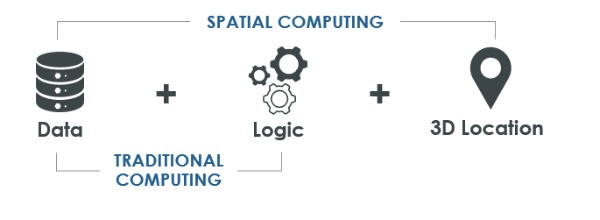
Spatial computing refers to the virtualisation of activities and interactions between humans, robots,
objects and the environment how they enable adaptation. In robotics, it refers to the advancement
of computer systems that enable robots to interact with its physical environment in three dimensions.
Main components:
Sensors and perception systems such as LiDAR, cameras, and ultrasonic devices become the eyes and ears of a system.
Simultaneous Localization and Mapping (SLAM) allows robots to build a map of an unknown location and track their location within it.
AI processes data collected which enables robots to recognise patterns, predict outcomes and make decisions.
HMI interactions are enhanced by enabling intuitive interactions between humans and robots.
When it comes to robotics in spatial computing, it's embedded to various hardware, most commonly: headsets,
smartphones, AI-powered glasses. Physical materials used to construct sensors used to input the space into the
processing stage include of silicon (a fundamental material), neodymium (used for technology with advanced imaging),
and lithium (powers batteries).
Apple, Microsoft, Google, and Meta, are the leading companies investing in Spatial Computing and developing new
hardware and software.
Autonomous vehicles heavily rely on spatial computing to navigate roads, avoid obstacles and interact with other
vehicles, components such as LiDAR allow them to create a 3D map of their surroundings.
Warehouse automation occurs through robots equipped with spatial computing to assist in the organisation of managing
inventory and pick orders. These robots can navigate complex warehouse layouts and work co-operatively with humans.
Potential of applications of spatial computing can be within engineering, enabling engineers to integrate technology
seamlessly into their workflow. It'll allow engineers to visualise and interact with data in real the world in
real-time, opening a new perspective and encouraging more intuitive decision making and problem-solving.
Reasons and Drivers
Spatial computing, especially in the Apple Vision Pro, addresses limitations in laptops and portable devices.
Despite the accessibility of laptops, the experience varies depending on the environment. However, spatial computing
enables usage of the same experience anywhere. In videography and photography, media lacks depth and presence.
Although, these limitations do increase creativity, spatial computing can assist in reliving the moment. Overall, it
addresses the 2D limitations of flat screens and allows for immersive simulation.
The main motivation for developing this technology was the need to blend the line between the physical world with
the digital world.
Its roots trace back to virtual reality (VR) and augmented reality (AR). It was initially used for entertainment and
gaming, but overtime, they made their way into the workforce. Advancements in hardware have propelled potential in
spatial computing, allowing sleeker, more modern designs.
Spatial computing began by revolutionising gaming and entertainment. As it was implemented into the workforce,
healthcare, manufacturing, and automotive have been leveraging spatial computing to improve training, product design
and operational efficiency.
It bridges the physical and digital world. It's enables immersive training, providing a safe environment to
experience realistic danger before entering the workforce, especially advancing industries such as automotive
manufacturing, healthcare services, and construction sites. Despite spatial technology demanding high initial
investments, it'll also saves cost in the long run by preventing the need to buy physical resources for repeated
training programs, further reducing waste. It's allowed multiple users to effectively collaborate within shared
mixed or virtual reality environments.
Potential Benefits
This technology benefits users by seamlessly combining real and virtual worlds, enhancing collaboration, training
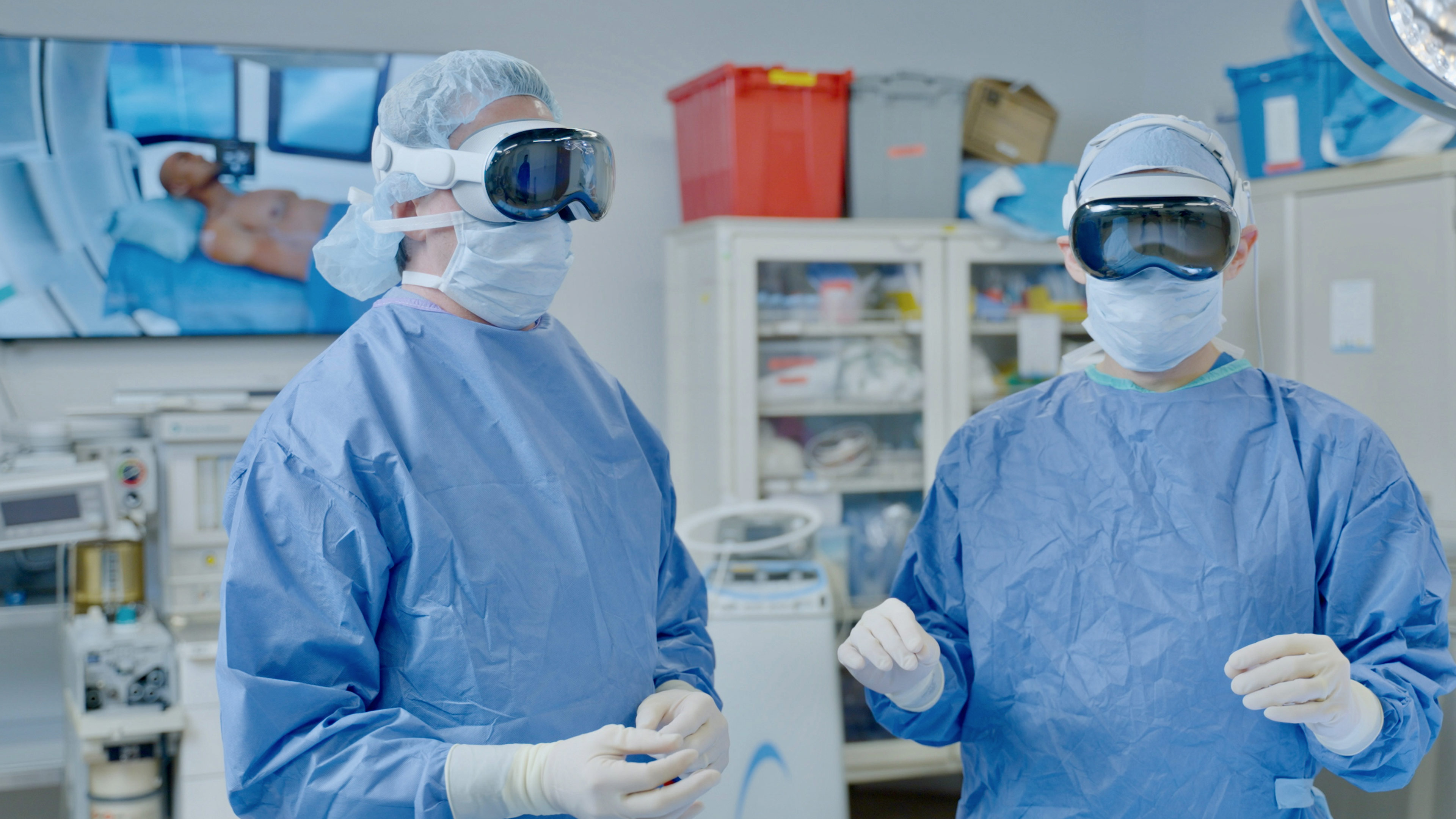
and simulation. Uses for spatial computing could be for surgical planning and training to connect and integrate data
from various IoT devices in the operating room while enhancing coordination whilst collaborating. Another use is to
assist with indoor navigation, not only making larger facilities easier to get around, also making places more
accessible for vision impaired individuals.
Advantages that spatial computing offers over 2D paradigms is depth and immersion. It enhances interaction between humans
and by seamlessly blending digital content with the physical environment.
Spatial computing can improve efficiency and productivity in the fields of product development, real estate, and
training. By implementing spatial computing into product development, the resource-intensive process of product
prototyping. Transitioning from physical prototyping to virtual prototyping will dramatically reduce costs and waste
for companies while increasing the ease of refining before creating the final product. Real estate tours are a major
part of the property buying process. However, geographical limitations are often present and restrict the market from
potential buyers. With spatial computing, real estate agents can create immersive 3D property tours. This also
provides a more realistic view over the photographic 2D view. Training programs will be revolutionised by providing
more a more interactive and immersive experience rather than the traditional manual and video tutorials. This will
improve retention of information and create a safer workplace for all.
Long term benefits to using spatial computing are the shift from screens to computer-based experiences. By investing
tons into this technology, the investment can reduce costs of spatial computing through time. As this technology
develops, it will revolutionise the way humans interact with data, their physical environment, and each other. The
use of VR, MR, and AR will allow for a digital reality, transferring away from 2D computer simulation.
This technology can benefit society at large by providing a more immersive way to learn, heal and work. Through
spatial computing, students may complete training courses in an interactive and immersive virtual world, which is
risk-free and much safer. Spatial computing can be brought into the healthcare by increasing accessibility, creating
new ways for people with disabilities to interact with their surroundings. As an example, providing visual cues for
people with hearing impairment. In the workforce, spatial computing may assist with collaboration, sharing virtual
workspaces and closing up physical distance.
Possible Adverse Impacts
Potential negative effects of the use of spatial computing can be categorised into health and security.
According to an
article from The Conversation, "80% of VR users report mild to severe short-term side effects".
The merging of physical and digital, resulting in an increased exposure to these technologies can lead to more
severe symptoms such as ocular fatigue, migraines as well as the blurring of the line between reality and technology.
Spatial computing networks are just as vulnerable to cybersecurity threats as major corporations so measures to
safeguard against cyberattacks are a necessity, especially when biometric data is stored.
With the advantage of spatial computing, safety and social factors of others may be impacted. With technology
embedded into everyday use, it can become a distraction and safety hazard, especially on the road or crowded
walkways. This may increase the risk of collisions or direction off course, onto roads. This may also lead to
isolating the user from others, resulting in non-users to feel ignored and neglected.
Ethical concerns associated with the use of the technology primarily involve privacy risks. Headsets and glasses
constantly scan private homes and public spaces and devices may log eye-movements, hand gestures and even
micro-expressions. As spatial computing requires continuous scanning and tracking, this behavioural data may be used
by tech companies to sell or used to target advertising.
Spatial computing can lead to job displacement and changes in the workforce through the automation of multiple tasks,
encouraging a shift in how work is done. If working with spatial computing, new skills will need to be learnt,
potentially opening new job opportunities.
The creation and usage of spatial computing use energy and rare materials. This causes carbon emissions, electronic
waste and habitat disruption. Continuous energy consumption comes from active headsets and sensors, which require
electricity constantly while they're active. Real-time 3D rendering also relies on heavy remote data centres,
increasing the strain on the grid. The demand in energy increases the generation of power, both renewable and unrenewable. The generation of unrenewable
energy causes carbon emissions, chaining into habitat disruption. Electronic waste is increased as old headsets and sensors are thrown away. With this goes
the founded rare Earth material initially used to produce chips and batteries.
Likely Impacts and Potential
The rapid advancements of spatial computing have resulted in high market adoption. Hardware such as the Apple Vision Pro and Meta Quest 3
drive the industry while the global spatial computing market size continues to skyrocket. However, high prices restrict acceptance for
consumers and concerns amongst privacy and security still withstand.
Future possibilities for spatial computing are advancements in battery-life, resolution and cost-efficiency. This technology can also create new
innovations such as more immersive experiences and making 2D opportunities more interactive.
Spatial computing could replace flat screens with interactive 3D digital layers. It can allow for a more flexible workspace, transform education into
immersive field trips or even allow doctors to view a patient's 3D anatomy during a surgery.
The main barriers spatial computing may face relate to hardware. This technology is expensive to produce, especially with headsets: the materials must be
light, and the battery life must last long hours. It's almost impossible to prevent cyber threats in this age and with spatial computing tracking microscopic
details and scanning private property, this puts the user's privacy and data at risk.
Spatial computing is globally perceived as the next generation of technology and a powerful boost in the workplace ‐ with both assistance and
training. In North America, they focus on the platform and software ecosystems, driven by major tech companies. While Asia-Pacific has the fastest growing
spatial computing markets, it focuses on device manufacturing, and the general everyday use of spatial computing is widely accepted.
Xu, J., Konstantinos Papangelis, Tigwell, G. W., Lalone, N., Zhou, P., Saker, M., … Schwartz, D. (2024). Spatial Computing: Defining the Vision for the Future. https://doi.org/10.1145/3613905.3643978